
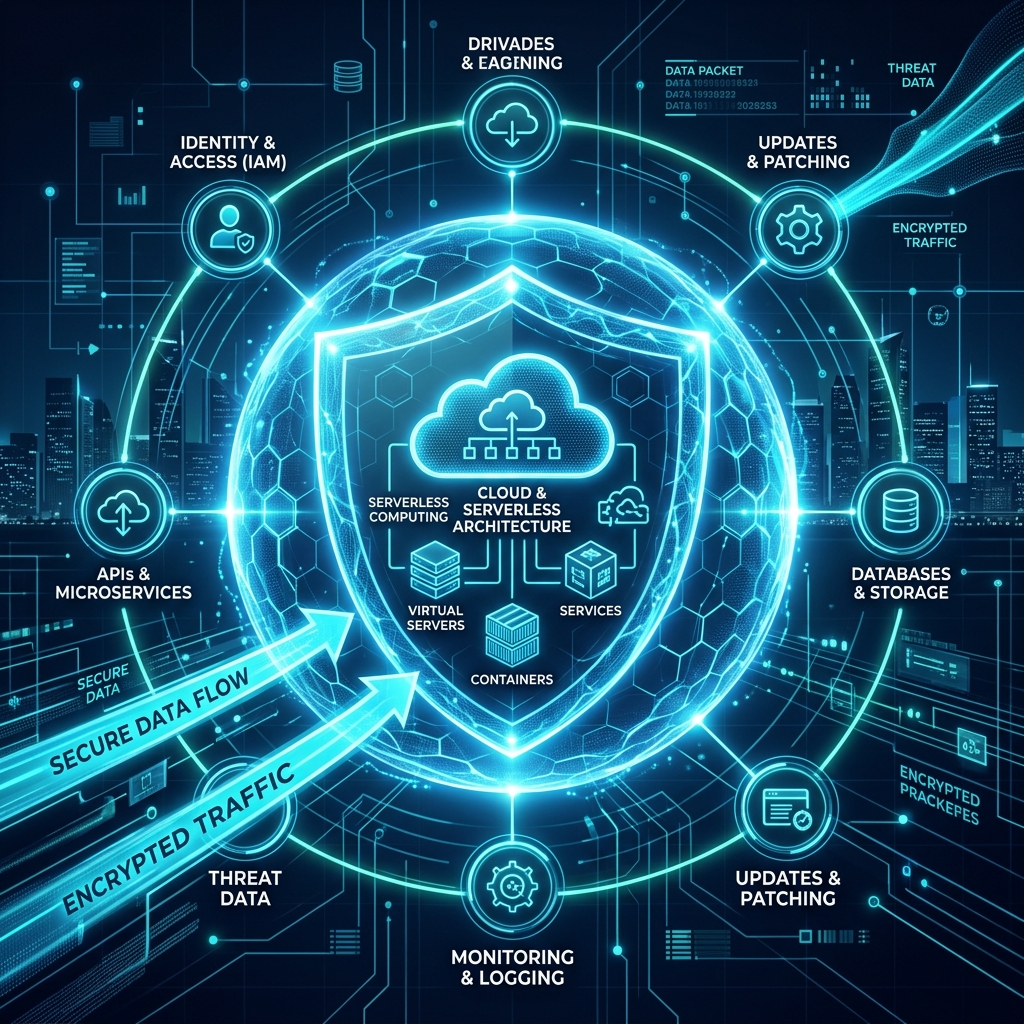
SERVERLESS COMPUTING

Understanding Cloud-Based Application Execution

EMERGING TECHNOLOGY  |  Engr. Catherine M. Verallo  |  Sept 12, 2026

PRESENTED BY:

  • ABAO JOHN LOUIE B.
  • ACE NIÑO SEGALES
  • AURE LORNA JAY
  • KURT CHUA
  • NIKKOS CHARLES

What We Will Learn

1

Serverless Basics

What serverless means

2

How It Works

Request and execution flow

3

FaaS & BaaS

Main serverless service types

4

Architecture

Functions, APIs, and databases

5

Pros & Cons

Benefits and limitations

6

Real-World Uses

Practical applications and SDN PRIME

What Is Serverless Computing?

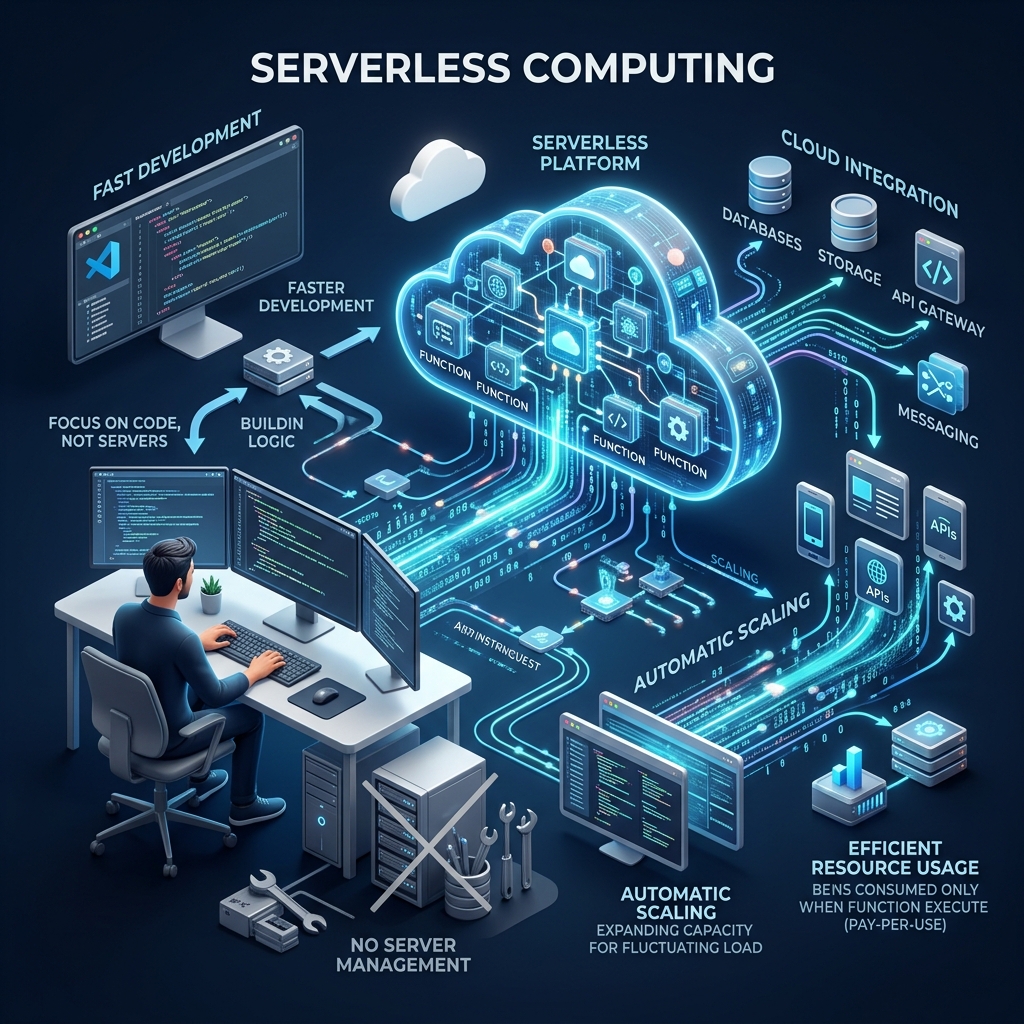
Serverless computing is a cloud model where the provider manages the servers and infrastructure, while developers focus on writing and deploying code.

  • No direct server management
  • Automatic scaling
  • Pay based on usage

Serverless does not mean there are no servers.
It simply means developers do not directly manage them.

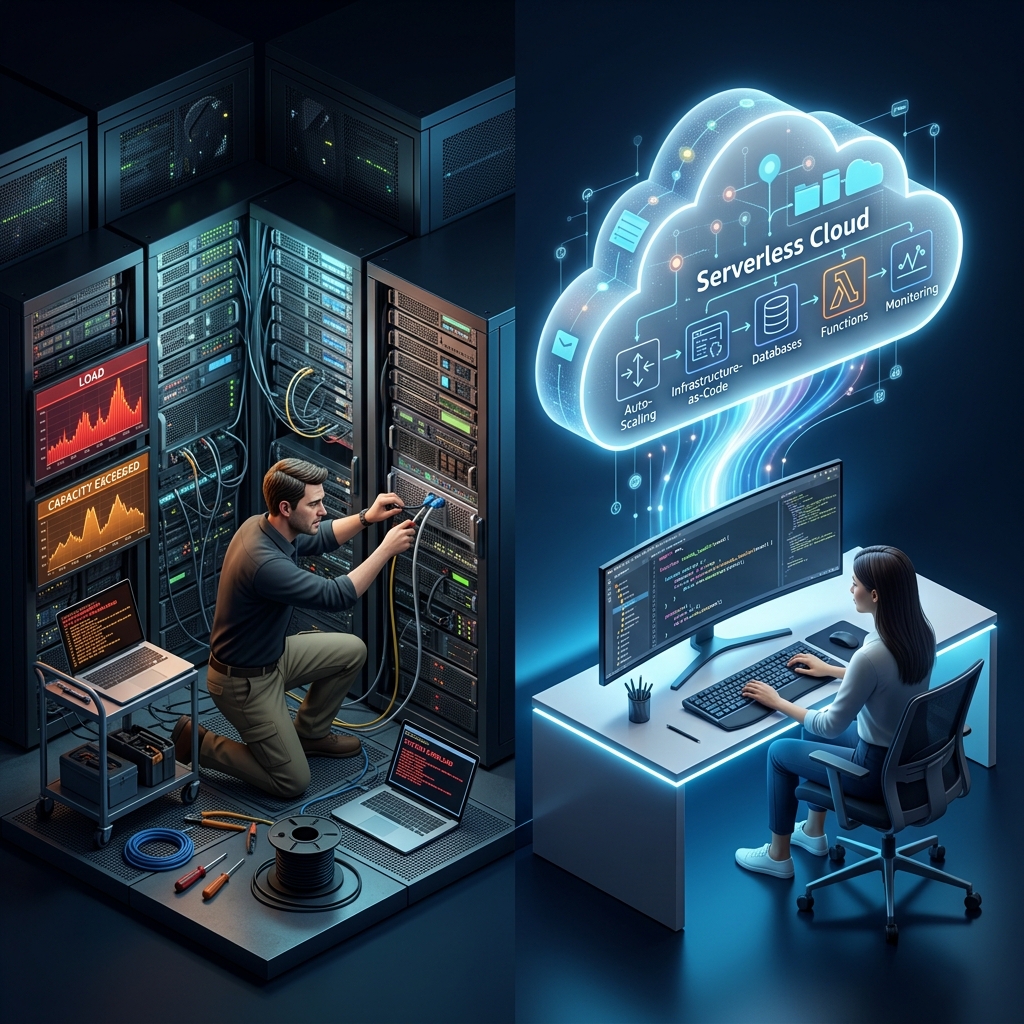
Serverless Architecture Concept

Why Was Serverless Developed?

Server maintenance takes time

Manual scaling is difficult

Resources may be wasted

Infrastructure costs can increase

Serverless reduces infrastructure management so developers can focus on building applications.

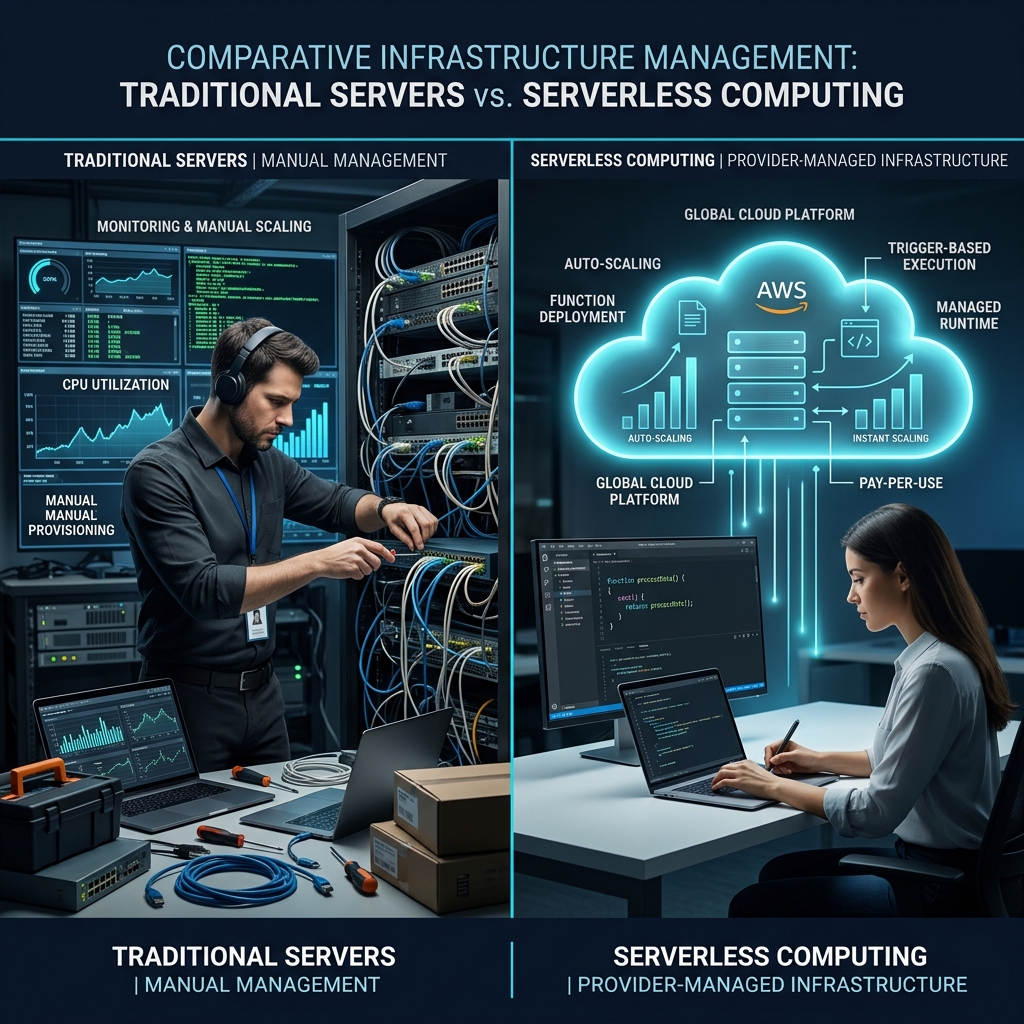
Traditional Servers vs Serverless Computing

How Serverless Works

When a user sends a request, the cloud platform automatically routes, executes, and responds — with no manual server management.

User Request CLOUD PLATFORM API Gateway Cloud Function Database Response
User sends a request
Platform triggers the function
Function executes and accesses data
Result is returned to the user

Main Components of Serverless

SERVERLESS PLATFORM Cloud Functions Runs application code API Gateway Receives and routes requests Database Stores application data Event Trigger Starts a function Monitoring Tracks performance and errors

Two Main Types of Serverless Computing

FaaS

Function as a Service

BaaS

Backend as a Service

Function as a Service — FaaS

FaaS allows developers to run small pieces of code without managing servers. The cloud provider starts and scales the function when an event occurs.

CLOUD
FUNCTION
IDLE
Function Execution
1
Waiting for event
2
Function triggered
3
Code is running
4
Result returned

Simple Cloud Function Example

JavaScript • Example Function
function handler(event) {
  const name = event.name || "Student";

  return {
    message: `Hello, ${name}!`,
    status: "success"
  };
}

This function receives an event, processes the data, and returns a result.

Backend as a Service — BaaS

BaaS provides ready-made backend services such as authentication, databases, storage, and notifications, allowing developers to build applications faster without creating the entire backend from scratch.

YOUR APPLICATION
TRY A BACKEND SERVICE
Login
Save Data
Upload File
Send Notification
View Analytics
☁️ BaaS
PLATFORM
Close ×
Provides:
Example:

FaaS vs BaaS

Feature FaaS BaaS
What it does Runs your custom code. Provides ready-made backend services.
Developer Role You write the functions. You connect to ready-made features.
Focus Code execution Backend functionality
Memory Tip "Run my code" "Give me backend services"

Advantages of Serverless Computing

⚙️

No direct server management

Focus purely on coding.

📈

Automatic scaling

Handles 1 user or 10,000 users automatically.

💰

Usage-based pricing

You only pay when the code actually runs.

🚀

Faster development

Quicker to build and launch apps.

Advantages of Serverless

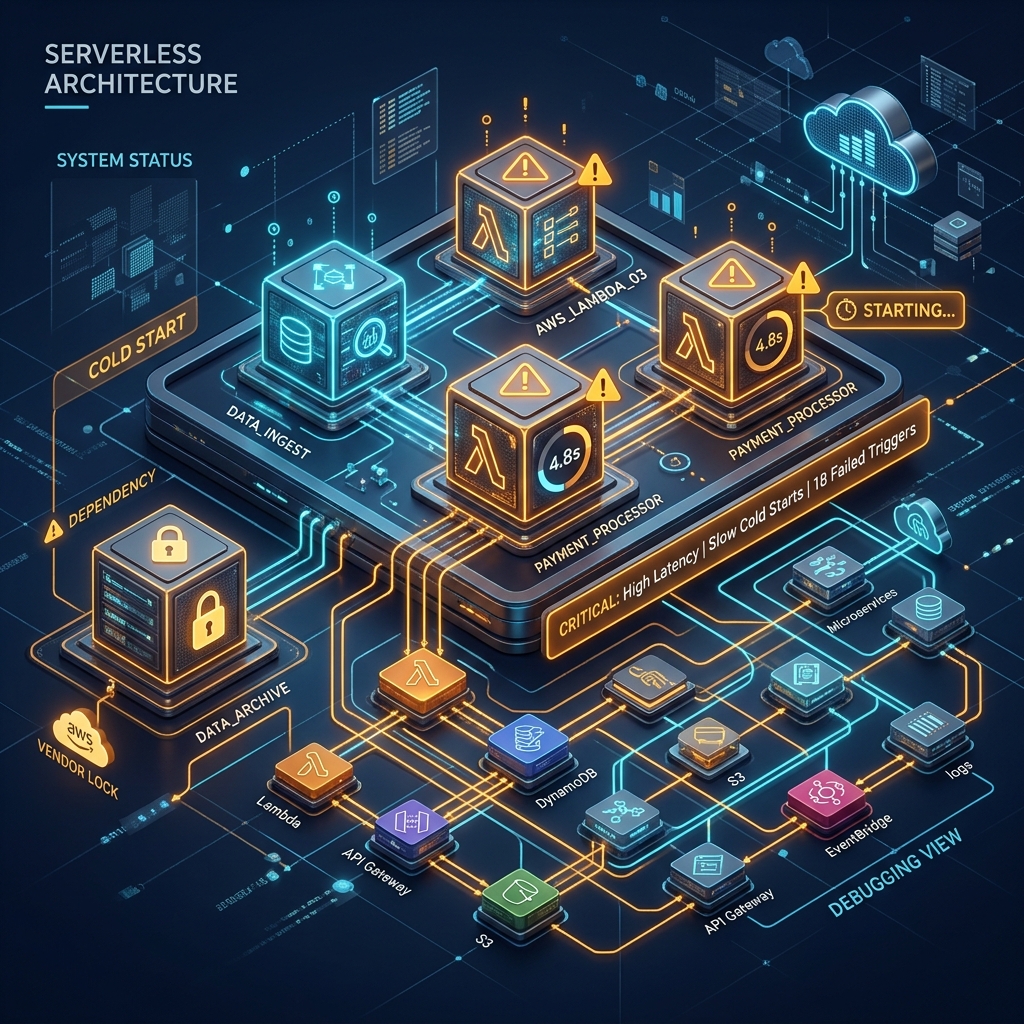
Disadvantages of Serverless

❄️

Cold starts

A slight delay when a function runs after being inactive.

⏱️

Execution time limits

Functions cannot run forever (e.g., max 15 minutes).

☁️

Dependency on internet & cloud

If the provider goes down, you go down.

🔒

Vendor lock-in

Hard to move from AWS to Google Cloud.

Limitations of Serverless

Traditional Server vs Serverless

Traditional vs Serverless Comparison
Traditional Server Serverless
You manage the operating system and updates The cloud provider manages the infrastructure
The server runs continuously (24/7) Functions run only when triggered
Scaling requires manual setup Scaling is handled automatically
You must configure resources Developers focus entirely on the code

Cloud Computing vs Serverless

Important concept: Serverless is one model within the broader category of cloud computing.

CLOUD COMPUTING VIRTUAL MACHINES CONTAINERS MANAGED SERVICES SERVERLESS "One model within cloud computing" CLOUD FUNCTIONS AUTOMATIC SCALING

CLOUD COMPUTING

The delivery of computing services over the internet.

Cloud Computing provides computing services through the internet, including servers, storage, databases, networking, and more.

SERVERLESS COMPUTING

A specific model where the provider manages the underlying servers.

Serverless is a cloud-computing model where the provider manages the underlying servers and infrastructure.

Security in Serverless Computing

Serverless platforms provide built-in security features, but developers must still protect application code, user data, and access permissions.

Serverless Security Core
Authentication
Authorization
Data Protection
Function Security
Monitoring

Authentication

Confirms the identity of users and applications before allowing them into the system.

Example: A user signs in with a verified email before accessing a serverless application.

Authorization

Determines which actions a user or function is permitted to perform after they are authenticated.

Example: Only a system administrator is permitted to delete user records.

Data Protection

Protects information during storage (at rest) and transmission (in transit) using encryption.

Example: Encrypt sensitive customer payment data before saving it to a database.

Function Security

Prevents unsafe requests and vulnerable code execution within the serverless environment.

Example: Validate all API input data before running a backend cloud function.

Monitoring

Detects unusual behavior, application errors, and active security threats in real-time.

Example: Send an automatic alert to the developer when repeated failed login requests occur.

"Serverless reduces infrastructure management, but secure coding and proper access control remain essential."

Serverless Cost Model

Serverless pricing is based on actual execution rather than reserved server time.

🖥️ Traditional Pricing

  • Pay for server uptime 24/7
  • Cost stays the same even when idle
  • Must predict capacity in advance

Serverless Pricing

  • Pay per function execution
  • No charge when idle
  • Scales cost with actual usage
100%
Trad
Low
15%
Sless
Low
100%
Trad
High
85%
Sless
High

⚠️ At very high usage, serverless may cost more than a dedicated server.

Cold Starts in Serverless Computing

A cold start happens when a serverless function is called after being inactive and the cloud provider must initialize it before execution.

Click a button below to simulate startup.
💤
Sleeping
Initializing
⚙️
Running
Responding

Title

Description

Real-World Applications

Serverless computing automatically scales and responds to events, reducing infrastructure management across many use cases.

☁️ PLATFORM
Select an application or trigger a live event.

Title

How it works

Example

Serverless Cloud Providers

Major cloud platforms offer serverless services. Each provider has unique strengths for different use cases.

🟠 AWS Lambda

FaaS

Runs code in response to events without provisioning servers.

▲ Vercel

Hosting + FaaS

Hosts web apps with built-in serverless API routes.

🔵 Google Cloud Functions

FaaS

Backend code without server management on Google Cloud.

🟢 Supabase

BaaS

Backend services including databases, auth, and storage.

Service Type

Best For

Key Feature

SERVERLESS EXAMPLE — ONLINE SHOPPING SYSTEM

How serverless functions could process an online shopping order.

👤
Customer
🛒
Online Store
Serverless
Function
🗄️
Database
Order
Confirmation
Tap a step to learn more, or simulate a full order process.

Example process:
A customer places an order on an online shopping website.
A serverless function receives and processes the order.
The function checks product information and saves the order in the database.
The system sends an order confirmation to the customer.
Illustrative example — demonstrates how serverless computing could support an online shopping system.

Serverless Deployment Process

Serverless deployment is the process of preparing, testing, connecting, and publishing serverless functions and cloud services.

function.js
function handler(event) { const name = event.name || "Student"; return { message: `Hello, ${name}!`, status: "success" }; }
Ready to run serverless function.
Deployment Process
1
Write Code
Waiting for code
2
Test Function
Waiting for test
3
Configure Services
Waiting for configuration
4
Deploy to Cloud
Waiting for deployment
5
Monitor Application
Waiting for monitoring
Requests
1
Errors
0
Status
Online
SERVERLESS FUNCTION IS LIVE
Educational simulation — no real cloud deployment is performed.

Monitoring and Observability

Monitoring and observability help developers understand whether serverless functions are running correctly and identify errors or performance problems.

Application Request
🌐
{ "user": "Student", "action": "viewDashboard" }
Ready to monitor serverless activity.
Serverless Function
Function
Waiting for request
Monitoring Tools
Logs
Waiting for logs...
Metrics
Requests
0
Successful
0
Errors
0
Duration
-- ms
Tracing
Client API Gateway Function Database Response
Alerts
System Status: Normal
Performance Monitoring
Response Time: --
Function Status: Idle
Service Availability: --
SYSTEM HEALTHY
Monitoring helps developers detect errors, understand application behavior, and improve serverless performance.
Educational simulation — no real cloud monitoring service is connected.

THE FUTURE OF SERVERLESS COMPUTING

Serverless computing may continue to grow as organizations build scalable, flexible, and easier-to-manage cloud applications.

Event-Driven Systems
Applications respond automatically to events, messages, and user actions.
SERVERLESS COMPUTING SCALABLE • AUTOMATED • CLOUD-BASED
🤖
AI and Intelligent Services
Serverless functions can connect AI tools, APIs, and automated workflows.
🌐
Connected IoT Applications
Serverless computing can support smart devices, sensors, and real-time systems.
🚀
Faster and More Efficient Execution
Cloud platforms may improve cold starts, response time, and resource efficiency.
🏢
Wider Digital Adoption
More schools, businesses, and organizations may use serverless cloud applications.
The future of serverless computing is focused on intelligent automation, connected systems, improved performance, and wider cloud adoption.

Summary and Quick Review

Review the key concepts from this presentation, then test your knowledge.

Key Takeaways

☁️
Serverless is a cloud computing model
⚙️
How serverless computing works
🔧
Difference between FaaS and BaaS
Advantages and disadvantages
🔒
Security and cost considerations
🚀
Cold starts and performance
🌐
Real-world applications
📊
Deployment and monitoring
🔮
The future of serverless computing

🧠 Quick Review Quiz

Question 1 of 5